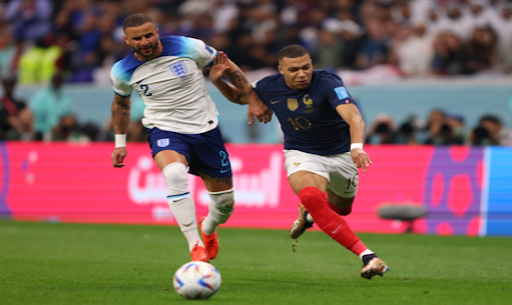
A football match can change completely in just a few seconds. When one team pushes forward and leaves space behind its defensive line, the opposing side may immediately win back possession, launch a forward pass, and create a scoring opportunity. This lightning fast transition is one of the most exciting aspects of modern football. So, what is a fast counterattack, how is it executed, and why can it make even the strongest defenses look vulnerable?
Fans watching matches on Xoilac can often witness attacks that require only three or four passes before an attacker finds themselves one on one with the goalkeeper. Behind this apparent simplicity lies exceptional speed, tactical awareness, and precise teamwork.
What Is a Fast Counterattack in Football?
Simply put, a fast counterattack is a method of attacking immediately after regaining possession of the ball. Instead of slowing the game down, passing sideways, or patiently building from the back, players move the ball forward at high speed to exploit the spaces left by the opposition.
When learning what is a fast counterattack, it is important to distinguish it from a regular attacking move. Counterattacks typically occur when the opposing team has not yet recovered its defensive shape, the lines are stretched, and fewer defenders are in position. Therefore, decision making speed becomes more important than prolonged ball possession.
Through matches and updates available on Xoilac football results, viewers can observe that an effective counterattack often lasts only a few seconds. The player who wins the ball, the one who makes the first pass, and the runners ahead must all understand each other perfectly to reach dangerous areas as quickly as possible.
Key Elements of an Effective Counterattack
After understanding what is a fast counterattack, it is essential to recognize the factors that make it successful. The first element is ball recovery. A counterattack can only begin when a team successfully intercepts a pass, wins a tackle, or capitalizes on an opponent’s mistake.
The second factor is the first pass. This is often the most important pass of the move because it determines whether the team can escape pressure and transition into attack. The pass must be quick, accurate, and directed toward open space. Another critical component is off the ball movement. Forwards, wingers, and full backs must immediately sprint forward to create multiple attacking options. On kqbd , many memorable counterattacks stand out because players without the ball constantly move to stretch the defense and create space for teammates.
Finally, there is the finishing phase. A team may transition brilliantly, but if the final action lacks quality, all previous efforts become meaningless.
How a Fast Counterattack Is Executed
To gain a deeper understanding of what is a fast counterattack, the process can be divided into three main stages. The first stage is winning possession. Defenders must read the game effectively, apply pressure at the right moment, and quickly identify passing options after regaining control of the ball.
The second stage is moving the ball beyond the opponent’s pressing structure. Teams may use a long pass to the wing, a direct ball through the middle, or quick one touch combinations to escape pressure. The objective is not to maintain possession for an extended period but to reach advantageous areas as quickly as possible.
The final stage is completing the attack. Attacking players must decide whether to shoot, make a final pass, or continue dribbling. Viewers on Xoi Lac 86 often see counterattacks fail not because of a lack of speed but because of poor decision making in the final moments.
Formations That Suit Counterattacking Football
When analyzing what is a fast counterattack, tactical formations are also worth considering. Systems such as 4 2 3 1, 4 3 3, and 3 4 3 are frequently used because they allow smooth transitions between defense and attack.
In a 4 2 3 1 formation, the two central midfielders provide defensive protection and initiate attacks with forward passes. The three attacking midfielders behind the striker can quickly push forward to create numerical superiority. In a 4 3 3 system, the wingers often use their pace to exploit the spaces behind opposing full backs.
Some teams prefer defending with a deep block before relying on fast forwards capable of operating independently. On Xoilac Live, fans regularly witness teams with less possession creating more dangerous opportunities thanks to their sharp counterattacking ability.
Advantages of Fast Counterattacking Football
One of the greatest advantages of understanding what is a fast counterattack lies in exploiting open spaces. When opponents commit many players forward, large gaps often appear behind the midfield and along the flanks.
This approach can also help teams conserve energy during certain phases of a match. Instead of constantly pressing or controlling possession, teams can maintain a solid defensive structure, wait for the right moment, and accelerate when opportunities arise.
Furthermore, fast counterattacks can be effective even for teams without an abundance of technical players. With disciplined defending, accurate passing, and quick attackers, underdogs can still create surprises. This is one reason why matches broadcast on Xoi Lac Link often produce unpredictable outcomes.
Limitations of the Fast Counterattack Strategy
Despite its advantages, anyone learning what is a fast counterattack should also understand its limitations. First, the strategy often depends on opponents pushing forward. If the opposition chooses a deep defensive approach and leaves little space behind, counterattacks become much harder to execute.
Second, this style requires a high level of precision. A single misplaced pass can waste a promising opportunity and may even expose the team to a counterattack in return. Additionally, spending long periods defending can place considerable pressure on the back line. If players lose concentration or fail to maintain proper positioning, the team may concede goals before having the chance to launch a counterattack.
Key Positions in a Counterattack
To fully explain what is a fast counterattack, it is important to examine the roles of different players. Modern goalkeepers are not only shot stoppers but can also initiate attacks through accurate throws and long passes.
Center backs and defensive midfielders are responsible for winning possession, scanning the field, and delivering the crucial first pass. Attacking midfielders act as connectors, receiving the ball between the lines and selecting the best route forward.
Wingers require pace, dribbling ability, and intelligent movement into space. Meanwhile, the center forward must be capable of holding up play, drawing defenders, and finishing quickly. Players who excel in these situations often become major talking points among fans on Xoilac TV after matches.
How to Identify a Strong Counterattacking Team
A strong counterattacking side does not necessarily spend the entire match defending. What matters most is its ability to recognize transition moments. As soon as possession is regained, multiple players move forward simultaneously to create clear passing options.
Once fans understand what is a fast counterattack, they can observe the number of touches, passing direction, and how players exploit available space. A quality counterattack usually involves few passes, high speed, and a shot before the opposing defense can reorganize.
Effective counterattacking teams also know when to slow down. If the opportunity disappears, players should retain possession, reduce the tempo, and avoid unnecessary risks.
Conclusion
In summary, what is a fast counterattack can be defined as the art of transforming defense into attack in the shortest possible time. This tactical approach emphasizes speed, awareness, precision, and coordinated movement throughout the team.
A successful counterattack is not simply about running fast. It is the result of organized defending, winning possession, selecting the right pass, and finishing efficiently. When watching matches on Xoilac 86, fans can truly appreciate the excitement of these rapid transitions, where just a few seconds can determine the outcome of an entire game.