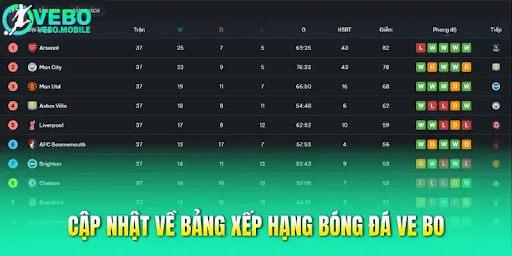
Read league standings as a set of related figures
When opening a table through Vebo bóng đá, check the competition and season first. On a small display, abbreviated names and compact columns should be read carefully so a quick glance does not become a comparison of the wrong teams or period.
Ranking alone is incomplete context, especially when games in hand mean that neighbouring teams have accumulated their points over different numbers of completed fixtures. Goals scored, goals conceded and goal difference describe aspects of the recorded season, but they do not explain every opponent faced or predict the score of the next match.
The update time matters when matches are in progress, because a page may show a live estimate or wait for confirmed results before changing the standings. Additional form indicators are useful when their period is understood, but a short sequence should not replace the broader context of opponents, venues and competition conditions.
Identify the fixture and its current scheduling status
The Bảng xếp hạng section deserves a review of all relevant columns, using the available display controls if necessary. Do not assume that the first visible numbers provide the complete explanation for why one team sits above another in the standings.
A fixture should be identified through its teams, competition and date, rather than a single familiar badge or abbreviated name that might also appear in another competition. Check the time zone used by the page before planning your viewing, especially if the event is being followed from a different country or near the change of date. A schedule is most useful when its status labels are understood, including distinctions between an expected start and a fixture that has been moved or has not been confirmed.
If a match detail changes, recheck the original competition information where available instead of relying on an old screenshot or a message forwarded without its publication time. When a fixture informs a wagering decision, the applicable handling rules still come from the provider accepting that selection, not simply from the schedule displayed by a reference page. A final check shortly before the planned activity can catch changes that occurred after your first review, reducing avoidable confusion without guaranteeing that every event will proceed as listed.
Use match context without turning it into a certainty
A recent sequence becomes more informative when its opponents and circumstances are considered, rather than counted as a simple number of wins that predicts the next match. Separate home and away information where it is relevant, and check whether the sample covers the same competition or combines events with different priorities and available players. Treat projected lineups as expectations until the relevant announcement is available, and remember that an earlier article may not reflect later changes in player availability.
A busy schedule can provide useful background, although it does not prove that a team will rotate players or perform poorly in the next match simply because another fixture is close. Statistical comparisons need matching definitions and periods, otherwise apparently conflicting numbers may simply describe different samples rather than an error in one of the sources. The aim is to organise relevant information and recognise its limits, leaving room for unexpected events instead of turning a detailed research process into a promise of a particular result.
Keep decisions within a clear personal plan
An entertainment budget should be chosen before a session begins and kept separate from money needed for daily life, rather than adjusted after an unexpected result. Choose a session duration as well as a monetary limit, since a sequence of short rounds or matches can extend an activity far beyond the time originally intended. When the planned money or time limit is reached, end the session rather than revise the plan according to the most recent win, loss or promotional invitation.
Past outcomes do not ensure that the next result will follow the same pattern, and changing a stake based on that expectation can increase financial exposure quickly. Access to a website does not by itself settle eligibility; confirm the relevant age conditions and local requirements before proceeding with any real money activity. A planned stopping point supports a deliberate choice about participation, while the option to pause remains valuable whenever the information or your personal circumstances are unclear.
Conclusion
Mobile table reading works best when the compact layout does not replace a full review of the relevant figures. Check matches played, current status and competition criteria alongside rank. Use that information to support questions about a fixture, while keeping the limits of past results clear in any later decision.