Gaming Users in 2025:Behaviour Trends, And New Digital Lifestyle
The world of gaming has always had a high level of dynamism and change but the year 2025 seems to bring about an even greater feeling of rapid evolution. Today's video gamer does not simply log in as a "customer" to go into the game room and play a match, but is viewed as a trendsetter, content creator and community builder. Platforms like http://1xbet.tz/en reflect this shift, offering flexible access and features designed for a generation that expects more than just gameplay.
The platform of http://1xbet.tz/en
1xbet login registration and many others have adapted to the evolution of the player experience with their ability to give users flexible access to various features geared toward this newer generation of players who are looking to get more out of their gaming experience, not just the experience of playing.
The years of technological progress through constant innovation, streaming culture and rapid growth in esports all create the new user of 2025, therefore to understand how to have more successful gaming content by 2025, we need to take an in-depth look at the players who are using this content, how they utilize it and why they continue to have an increasing level of influence over our culture as a whole.
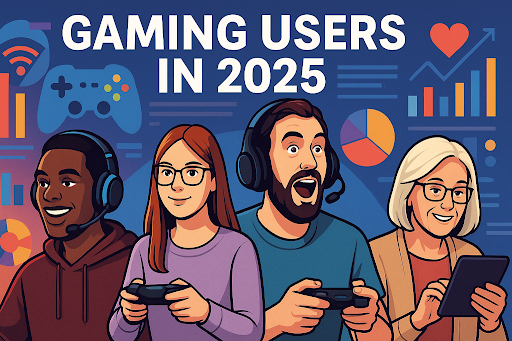
Who Plays Video Games Today?
Gaming now encompasses all ages and demographics, extending across generations and lifestyles; as such, it is one of the few truly inclusive types of entertainment.
Some Key Characteristics of Today's Gamers:
• Usage of numerous devices, including console at home, mobile while away from home, and PC for competing.
• Prefer to own digital content via subscriptions rather than owning physical copies.
• Have a strong connection to online communities as social centers.
Recent data from the gaming industry show that nearly 75% of gamers currently have at least one subscription-based gaming service, indicating that subscription-based access models are becoming standard.
The demographic distribution of gamers in 2025 is listed here (ages 18 - 24; 25 - 34; 35 - 44; 45 or older):
Age Group | Share of Active Gamers 2025 | Growth since 2020 |
18–24 | 28% | +4% |
25–34 | 25% | +6% |
35–44 | 18% | +7% |
45+ | 29% | +12% |
This evidence confirms an important fact: gaming is for everyone, including students and seniors alike!
Behaviors and Habits
The current gamer prioritizes speed, convenience and a seamless user experience, with no tolerance for waiting, and will expect instant access on devices regardless of location.
Core Behavioral Traits:
No tolerance for intrusive advertisements; dislike poor monetization.
Will pay for premium experiences without interruptions.
Would like to share gameplay via streaming, or websites such as Youtube or Twitch.
Have streaming as part of their gaming identity, as a viral video or clip can achieve more of an audience than a professional competition in some cases, creating a blurry line between player and entertainer.
Playing Together: How Communities Are Growing
Gaming communities in 2025 will function as digital social clubs; players not only compete, but also collaborate, share strategies and form meaningful relationships.
Entertainment through trust within the community is valued more than traditional advertising; whereas recommendations from like-minded individuals are respected more than promotional advertising, therefore, community engagement will become an essential component for platforms and developers.
Gamers Spending Habits
The days of purchasing a game or two in a year are behind; the new way for today's gamer to spend their money is on many different forms of both digital and physical experiences.
Top Categories Of Spending Are:
Subscription models/season passes
Personalization (ex skins/avatars)
Hardware (such as VR headsets or streaming devices)
With the way gamers are spending their money, the global gaming industry is anticipated to reach $350 billion by the year 2025.
VR and AR devices are now being considered 'mainstream', and approximately 20% of gamers have a form of immersive gaming gear in their homes. This is indicative that instead of just being a screen, gaming is moving towards a fully interactive experience.
Connected To The World With Ease of Access
Gamers now expect everything to be 'connected'; as such, most games incorporate messaging, social media and digital wallet applications (such as using 1xbet for logging in and registering) as forms of connectivity. Gamers are looking for services/ platforms that integrate effortlessly into their daily routine.
In addition, Fitness Gaming has increased in popularity. VR fitness programs or AR based fitness programs have turned physical exercise into an interactive game with many users posting their progress online for others to see and use for motivation or to interact with.
Competitive Edge: Growth of esports
Esports has continued to disrupt the definition of competitive entertainment. When you have huge audiences, sold-out arenas, millions of dollars in prize money; there is no question that esports is a true global cultural phenomenon!
Esports Segment | Estimated Revenue 2025 | Growth from 2022 |
Sponsorships | $1.8B | +24% |
Media Rights | $1.1B | +31% |
Merchandise & Tickets | $900M | +19% |
Streaming Revenue | $700M | +22% |
For many fans, esports aren’t just about competition; they’re about identity. Fans follow their teams, buy merchandise, and cheer for their favorite pros, just as they do in mainstream sports.
More Casual Gamers than Esport Players
While esports’ popularity is on the rise among how much money they generate and how many people participate in them, casual gamers will still outnumber esports players by a wide margin. The biggest part of esports and video gaming in general is mobile gaming, which makes up more than half of all global revenue.
Mobile gaming continues to be the most accessible, affordable, and easy-to-use way for millions of people around the world to get involved in gaming and become part of the overall gaming community. The success of casual gamers has been critical to the continued growth of the entire gaming industry and the promoting inclusiveness among gamers.
Data Driven Personalization
Using total data analysis within data-driven games can create personalized game experiences for players as every action taken, including purchases, click-throughs and time spent playing, allows game developers to create better tailored content for increased player engagement.
However, players are looking for transparency and many will not support developer or platform with a lack of clarity on how their data is being used. Players are becoming more aware of privacy and when developers and or platforms communicate how their data will be used it will improve trust and loyalty to those developers and or platforms.
Final verdict
In conclusion, The characteristics of a gamer in 2025 will be defined by diversity, connectivity, and influence. Gamers in 2025 will no longer simply play games; rather they will shape the industry and have an active role in its development.
Gaming has become a lifestyle for players encompassing all areas of entertainment, socialization, competition, and even exercise; and because of websites such as http://1xbet.tz/en1xbet login registration and streamlined systems such as 1xbet login registration, are now expected to be part of the players' daily lives as well.
In short, Modern gamers will not only be involved in playing games; Modern gamers will also re-define the meaning of the term Gaming.