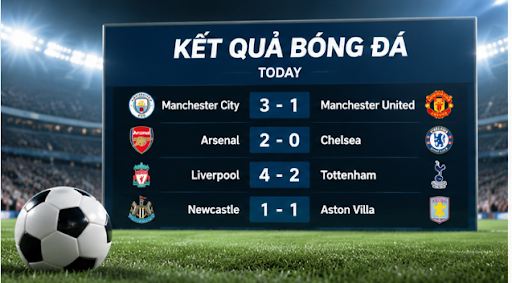
A final score is the simplest summary of a football match, but it rarely explains everything that happened. A 2–0 victory may have been comfortable from beginning to end, or it may have resulted from two late goals after a closely contested game. That is why supporters should treat results as the beginning of post-match analysis rather than the end.
Reading football results effectively means connecting the score with competition context, match events, recent form, and the effect on the standings.
Start With the Essential Result Information
The first step is confirming the basics: teams, final score, competition, date, and match status.
A platform offering trực tiếp luongson information can help users move between football events and related match data, but readers should still pay attention to whether a score is final, in progress, postponed, or decided after extra time.
This distinction is especially important in cup football. A displayed score after 90 minutes may not represent the final outcome if extra time or penalties follow.
Look Beyond Goals
Goals naturally attract attention, but many other events shape a match.
Red cards can dramatically change tactical balance. Substitutions may alter momentum. Injuries can force a manager to abandon the original plan. The timing of goals also matters because scoring early creates a different game state from scoring in stoppage time.
Where reliable statistics are available, possession, shots, shots on target, and other indicators can add context. No single statistic should be treated as a complete explanation, but several together can help readers understand the pattern of play.
Use Kết Quả Bóng Đá to Review Matchdays
A dedicated Kết quả bóng đá page allows supporters to review completed matches without searching for each game separately.
This is particularly helpful during busy weekends. Users can scan one competition, identify surprising or important results, and then investigate individual games in more detail.
Filtering by competition or date can make the process faster. Someone following the Premier League, for example, may not need results from dozens of unrelated leagues at the same moment.
Connect Results With Recent Form
One result provides limited information. A sequence of matches is usually more informative.
Look at the previous five or six games and consider the quality of opposition, venues, and competitions involved. A team may have several victories against lower-ranked opponents before facing a much stronger side.
Home and away form can also differ. Some teams produce noticeably different performances depending on venue, tactical matchup, or travel requirements.
The key is to avoid reducing form to a simple string of wins and losses without understanding the matches behind those outcomes.
Check the Effect on Standings
League results have consequences beyond the individual game.
Three points can change title races, qualification battles, or relegation situations. A draw may be valuable to one club but disappointing to another depending on their objectives.
After checking a final score, looking at the updated table helps explain why the result matters.
Cup competitions require a different approach. Instead of league position, readers may need to consider qualification, aggregate scores, or progression to the next round.
Distinguish Performance From Outcome
Football regularly produces matches in which the result and performance tell different stories.
A team can create many opportunities but lose after conceding from a counterattack. Another can defend for long periods and win with limited possession.
That does not make the score misleading—the result remains the official outcome—but it means readers should avoid assuming that the winning team necessarily controlled every aspect of the match.
Post-match statistics and reports can provide useful supporting context.
Compare Results Carefully
Historical results are often used to compare teams, but context matters.
A meeting from several seasons ago may involve different managers, players, and tactical systems. Even recent head-to-head records can be misleading if circumstances have changed substantially.
Current-season information generally provides more relevant context, although historical meetings can still be interesting as background.
Conclusion
Football results provide certainty about the outcome, but they do not automatically explain the match. Supporters gain much more by combining scores with events, statistics, recent form, competition format, and updated standings.
By reading results in context rather than isolation, fans can build a clearer picture of team performance and understand how each match contributes to the wider story of a football season.