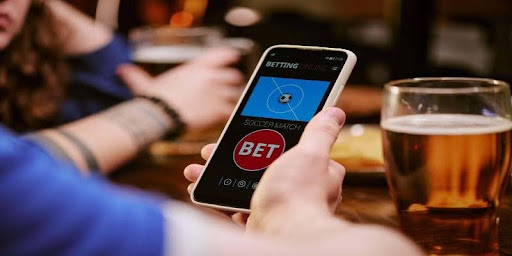
Bookmaker odds are often discussed as though they were predictions handed down by people who know something you do not. They are nothing of the sort. A price is a commercial number, built from a model, adjusted by a trader, loaded with a margin and then reshaped by whatever money arrives afterward. Understanding that sequence changes how you read a board entirely, because it tells you which numbers reflect genuine information and which simply reflect liability. This guide walks through how prices are made, how to read them and how to compare them across the market, including the boards at bongdalu.
How Bookmaker Odds Are Actually Set
At bongdalu , Before assessing whether a price is good, it helps to know what went into producing it in the first place.
The model comes first
Every operator starts from a quantitative base, usually team ratings, expected goals data, historical results and situational adjustments such as venue and rest days. That model produces a raw probability for each outcome, and the raw probability is the honest number before anything commercial is applied.
The margin is added on top
Raw probabilities are then shortened so that the market adds up to more than 100 percent. That excess is the overround, and it is the operator's built in charge for taking the bet. Nothing about bookmaker odds makes sense until you accept that this step happens before you ever see a price.
Traders adjust manually
Automated pricing handles the bulk of the card, but traders override it for team news, weather, motivation, refereeing appointments and anything the model handles poorly. Cup competitions and lower leagues receive far more manual attention because the data is thinner.
Liability shapes movement
Once a market opens, prices move partly because of new information and partly because of exposure. If heavy money lands on one side, the operator shortens that price and lengthens the other to balance the book, regardless of whether anything about the match has changed.
Limits do the quiet work
Stake limits are the least visible tool and one of the most important. A short price with a low maximum stake tells you the operator is uncertain and unwilling to take volume, which is often more informative than the price itself.
Reading Bookmaker Odds Without Getting Fooled
With the mechanics clear, the practical skill is extracting information from a price rather than reacting to it.
- Convert every price to implied probability before judging it. Divide 100 by the decimal figure and work with percentages instead of prices.
- Add the market up. A 1X2 market totalling 106 percent is charging you six percent before any assessment of the teams applies.
- Compare at least three operators on the same selection. Margin differences compound across a season far more than occasional big wins do.
- Ignore promotional boosts until you have checked the base price, since an enhanced price on a poor line is still a poor bet.
- Watch which direction a price moves and how fast. Slow drift usually reflects public money, while a sharp move typically reflects news or informed liquidity.
- Note the maximum stake alongside the price. Low limits on a short price signal genuine uncertainty from the operator.
- Grade yourself against the closing line rather than against results, because a single match tells you nothing about your judgement.
That last point is worth expanding. Results are noisy over any period a normal bettor can observe, so a winning month proves very little. Consistently taking a better number than the market settles on is a much cleaner signal, and it shows up long before profit does. Anyone tracking their own bookmaker odds history against closing prices will learn more in three months than from a year of counting wins.
There is a common misconception worth clearing up as well. Operators do not need you to lose in order to profit. The margin does that mathematically across all customers, which is why the more important question is never whether the book wants you to win, but whether the price you took was better or worse than the market consensus at the time.
Comparing Bookmaker Odds in Practice
Turning all of this into a routine takes only a few minutes per bet and produces the most reliable edge available to a recreational bettor.
Build a short comparison list
Keep three or four operators open for the markets you bet most. You do not need twenty accounts, since most of the available variation appears within a handful of books on any given market.
Distinguish line shopping from price shopping
On handicap and totals markets, the line matters more than the price attached to it. Taking minus 0.75 instead of minus 1.0 is usually worth more than a small odds improvement on the worse line, and this is where most comparison effort should go.
Know where margins sit
Asian handicap and main goal lines carry the tightest bookmaker odds on any football card, while correct score, scorer and specials markets carry the widest. Concentrating your volume in low margin markets is a structural decision that pays out quietly over time.
Understand what an outlier means
If one operator posts a noticeably longer price than the rest, it is either slow to react or holds a different view. Slow is worth backing, different is worth investigating, and telling them apart usually comes down to whether the rest of the market moves within the next few minutes.
Time your entry
Early lines carry more error and lower limits. Prices after confirmed team news carry less error and deeper liquidity. Both are usable, but they suit different approaches, and mixing them without noticing is a common source of inconsistency. Checking the bookmaker odds on bongdalu at both points across a few weekends is a straightforward way to learn which timing suits how you bet.
Conclusion
Bookmaker odds are prices, not forecasts, and reading them properly means separating the model from the margin and the margin from the money. Bảng xếp hạng bóng đá , add the market up so you know what you are being charged, compare a handful of operators on every bet, and pay more attention to lines than to small odds differences. Track your entries against closing prices instead of results, and treat low limits as information rather than an inconvenience. Bring that routine to the boards at bongdalu and you are no longer guessing at what a number means, you are pricing a risk deliberately.