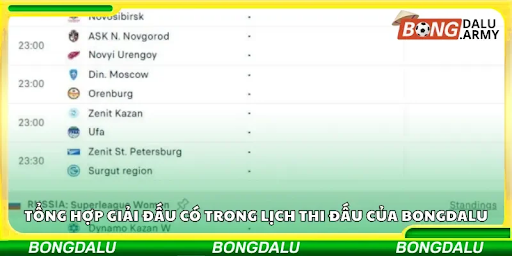
Following football becomes much easier when supporters know not only who is playing, but also when and where a match takes place. A well-organized fixture calendar can help fans plan their viewing, compare upcoming games, understand congested schedules, and follow several competitions without repeatedly searching for individual matches.
Online football platforms bring this information together in one place. However, reading a schedule effectively requires more than simply checking kickoff times. Competition, venue, time zone, postponements, and recent scheduling changes can all affect how a fixture should be interpreted.
Using Bongdalu as a football information hub
Football followers can visit bongdalu when looking for match-related information collected within a single online interface.
A centralized football page can be particularly useful during busy periods when domestic leagues, continental competitions, and international fixtures overlap. Instead of checking several competition websites individually, users can start with an overview and then verify important details through official league or club sources.
The key is to treat a football information platform as an organizational tool. For significant schedule changes, official competition announcements remain valuable because kickoff dates and times can occasionally change.
Understanding the Lịch thi đấu section
The Lịch thi đấu page is intended for users who want to browse upcoming football fixtures.
When reading a fixture list, begin by identifying the competition. Two clubs can meet more than once during a season in league and cup competitions, so the tournament name provides essential context.
Next, check the displayed date and kickoff time. International users should pay particular attention to time zones. A match listed late at night in one country may take place on the following calendar day elsewhere.
Why competition context matters
A fixture rarely exists in isolation. Its significance often depends on the competition and stage of the season.
A league match may influence standings, while a cup fixture could be part of a knockout round. Continental competitions introduce another layer because clubs may need to travel internationally between domestic games.
Understanding this context makes the schedule more informative. Instead of seeing a simple list of dates, users can recognize periods in which a team faces a particularly demanding sequence of matches.
Home and away information
The venue is another basic but important part of a fixture. Most schedules identify the home team and away team, although formatting can differ between platforms.
Home and away status can affect travel requirements, preparation time, and the overall match environment. For supporters attending games, the venue obviously has practical importance as well.
When planning travel, users should verify stadium and kickoff details through official sources before making arrangements. Matches can be moved for broadcasting, security, weather, or competition-related reasons.
Watching for postponements and changes
Football schedules are not permanently fixed. Severe weather, calendar conflicts, broadcasting decisions, or other circumstances can result in postponements or revised kickoff times.
This is why checking an old screenshot of a fixture list is not always sufficient. Users should revisit current information closer to matchday.
For major changes, club websites and competition organizers are useful verification sources. A schedule platform can provide a convenient overview, while primary sources can confirm the latest official arrangement.
Using fixtures to understand team workload
One of the most useful applications of a schedule is evaluating how frequently a team is playing.
A club competing in several tournaments may have matches every few days. Users can compare dates to identify short recovery periods and stretches involving significant travel.
This information can provide context for squad rotation and team selection. However, a busy schedule alone does not determine how a match will unfold. Injuries, tactics, opposition quality, and individual performances remain important factors.
Organizing your own football calendar
Supporters following several leagues can create a simple personal viewing calendar. Start by identifying the competitions and clubs that matter most, then record the relevant fixtures.
Adding the kickoff time in your own time zone can prevent confusion. Calendar reminders are also useful for matches scheduled several weeks ahead.
For particularly important fixtures, checking the schedule again on matchday is sensible because late changes can occur.
Combining schedules with other match information
A fixture calendar becomes more useful when combined with standings, previous results, and team news.
For example, league standings can explain why a late-season match carries particular importance. Previous results provide recent context, while official team news can identify unavailable players.
The important point is to keep these information types separate. A fixture tells users when a match is scheduled; it does not predict what will happen.
Conclusion
Following football schedules online is most effective when users look beyond the kickoff time. Competition, venue, time zone, fixture congestion, and possible schedule changes all provide valuable context.
Bongdalu can serve as a starting point for organizing upcoming matches, while official club and competition sources can be used to verify important changes. By combining a clear fixture calendar with standings, results, and current team information, football followers can build a much more complete understanding of the season.